
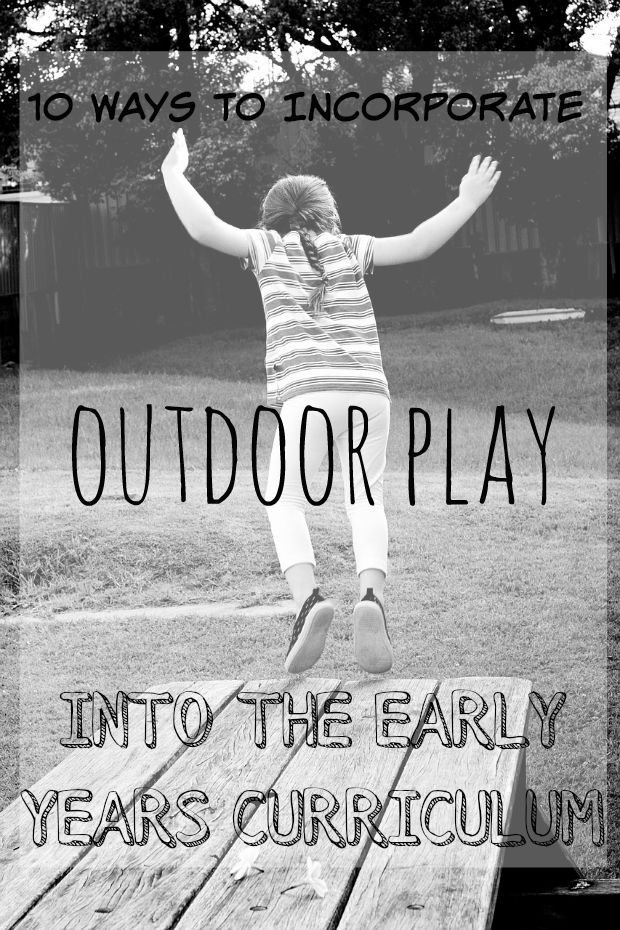
Every child deserves the best possible start in life, which is why the Early Years Foundation Stage (EYFS) sets the standards that all early years providers must meet to ensure children develop and learn well. Programmes should involve activities that help children with communication and language skills; physical development; personal, social and emotional development; literacy; mathematics; understanding the world; and expressive arts and design – so with this in mind, here are ten ways to incorporate outdoor play into the early years curriculum.
-
Allow children to play in the great outdoors on suitable equipment
EYS is all about learning through play and developing their co-ordination skills, control and movement are all essential elements of the curriculum. Child-friendly equipment such as climbing frames and slides can be bought from www.hope-education.co.uk and will help keep kids active and fit.
-
Set up a soft play area outside
Again, letting children have fun outside in a soft play area will keep their minds stimulated promoting balance, communication skills, independence and self-confidence. Everything from ball pits to balance pads can be bought at a great price and will brighten up any outdoor space as well as being soft and safe.
-
Arrange energetic outdoor games
Outdoor games not only keep children moving, they also promote self-confidence and help little ones to understand the importance of teamwork. As part of the social and emotional development part of the curriculum, children should also be able to try new activities and be able to say why they prefer some activities more so than others. Popular games include bean bag throw, hula hooping and hopscotch.
-
Set up fun giant number and alphabet puzzles
Early years children are required to learn their numbers from one to 20 as well as the alphabet. Playing with giant puzzles in the great outdoors is a great way to practice number and letter orders and will encourage them to work as a team, thus developing their communication skills.
-
Enjoy water play
One of the many early learning goals is to help children explore and understand the world around them, which is why water play is so great. Not only can they get wet and make a splash they can learn about solids and liquids, explore textures and follow basic instructions whilst all the mess is kept out of the classroom!
-
Give sensory sand play a go
Sensory play with sand trays is also an excellent way for little ones to develop their fine motor skills and concentration. It teaches them to handle equipment and tools effectively – a key physical development goal mentioned in the curriculum – and promotes both independent play and co-operative play.
-
Set up fun and interactive treasure hunts
As part of the curriculum, children should be able to understand the world around them and talk about features of their own immediate environment. This makes treasure hunts ideal as they can go outside in search of a wide range of objects such as flowers, trees and pinecones.
-
Have fun with arts and crafts
There are many arts and crafts which can be done outside allowing youngsters to explore a wide range of materials without worrying about making a mess indoors. Learning how to be creative is part of the curriculum and can be incorporated into fun play sessions.
-
Teach the children how to garden
Gardening is not only an enjoyable outdoor activity, but one that can assist with fine motor and co-ordination skills and help children understand ‘how’ and ‘why’ plants grow – which is all part of learning about the natural world and their environment.
-
Encourage role plays
As part of the curriculum, children are expected to represent their thoughts, feelings and emotions through exciting role play tasks and stories, so having an outdoor dress up corner could be ideal. Wendy houses, mud kitchens and other outdoor props such as wheelbarrows and watering cans could also be used and the more imaginative the session, the better.
Disclosure: This is a guest post.