
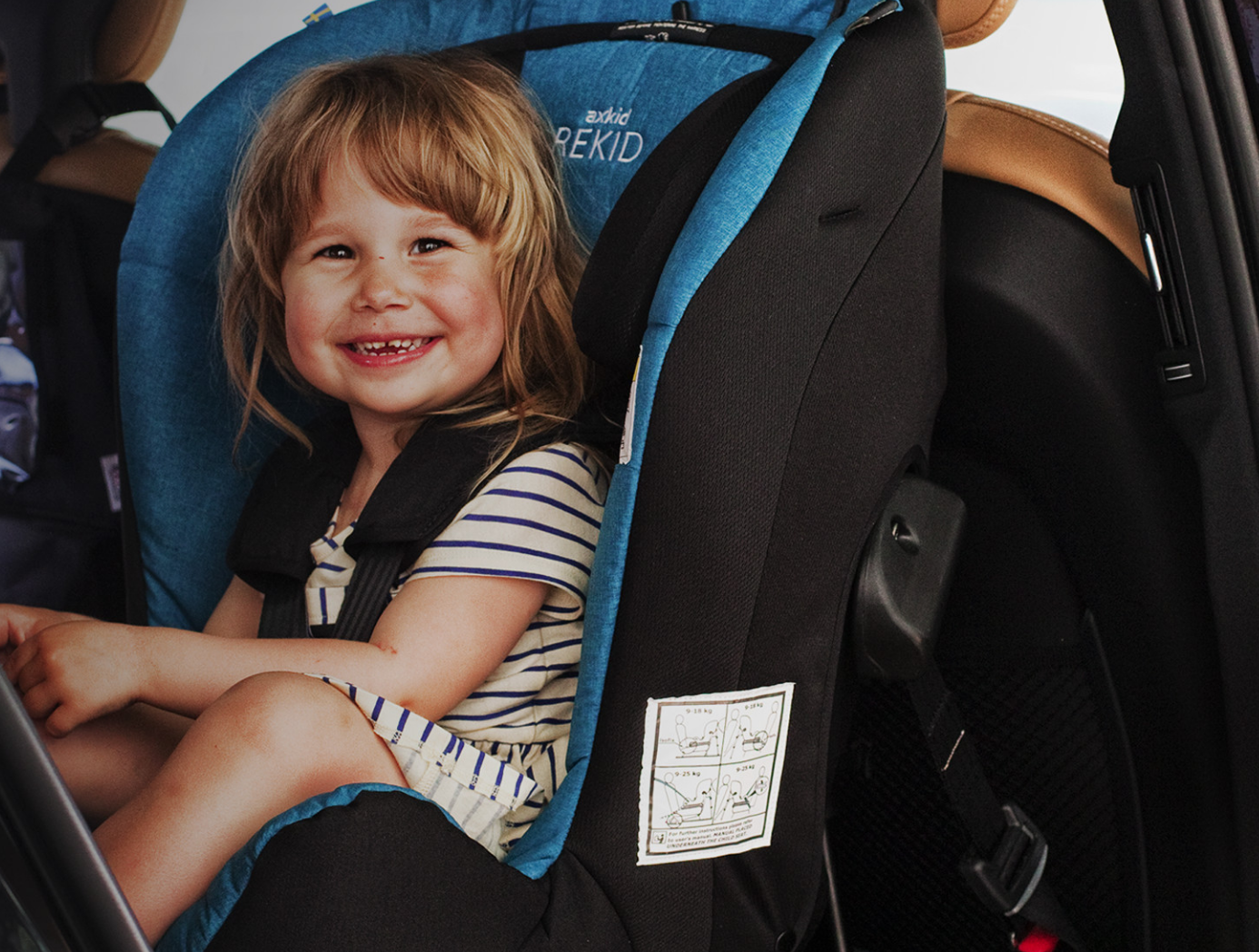
Every parent knows that one of the most important choices you make for your child is choosing the right car seat. Rear facing, front facing, combination, isofix, the choices can seem endless. It’s important, therefore, to get as much information as possible before purchasing your seat. Choosing the correct seat for the height and weight of your little one, ensuring the seat is compatible with your car and is correctly fitted can be daunting, so it’s really worth purchasing from a retailer that can provide you with expert advice for the questions you inevitably have.
It’s agreed that a rear facing car seat is a must for babies as their heads are heavy and their necks are weak; for example, the head of a 9 to 18 month old can be almost a quarter of the toddler’s total mass. The Royal Society for the Prevention of Accidents (RoSPA) advise that rear facing seats offer greater protection for the head, neck and spine and suggest, therefore, that it is best to keep your child in a rear facing seat for as long as possible.
This wasn’t something I was aware of and it’s still relevant for us, as Baby is not yet 3 and a half. It’s a philosophy that has been championed in Sweden for decades, where children remain in rear facing seats until the age of 4. There are a number of common reservations regarding prolonged use of rear facing seats. One is that the parent can’t see their child if they are rear facing but this can easily be sorted using a mirror. There’s also the issue of leg room for older children and while they obviously won’t be able to stretch, they are much more flexible than the majority of us “older” people and find sitting cross-legged a lot more comfortable than I would!
Another common concern is that a rear facing seat will not fit, or will take up too much room, in the car. There are, however, seats designed for maximum comfort that are compact enough to fit in small cars too. One such seat is the Axkid Minikid. It’s a rear facing seat, for children between 9 and 25kg, that is easily secured in the car using a 3 point harness seat belt. It has self-adjusting tether straps that are tightened by “wiggling” the seat and also benefits from an automatically adjusting harness so no matter how tall your child, the harness will always be in the correct place.
It’s important to stress that every child seat on sale in the UK has to meet an EU safety standard and all are designed to protect your little one. It’s also worth saying again that no matter what seat you choose, it has to be suitable for your child and car and must be fitted correctly.
How long were your kids in rear-facing car seats for?
Disclosure: This is a collaborative post.
Comments 2
I think extended rear facing is something every parent should be told about. Dil will be 3 in November and is rear facing in a Britax Two Way Elite which lasts up until 25kg (he should be about 7/8 by then) and can face either way. I’ll be keeping him rear facing for absolutely as long as possible as he’s 5 times safer that way round xx
I find it strange to have a toddler that is nearly 4 in a rear facing car seat. If that was me I’d get sick basically driving backwards. It’s not fair on the child. He can’t look out the window. It’s tree rear facing is safer of course but what did we do 25 years ago? I know the technology is well more advanced now.
My first born moved into a forward facing seat at 9 months. My youngest went into a forward facing seat at 13 months I think. They’re all guidelines and it’s up to everyone really.